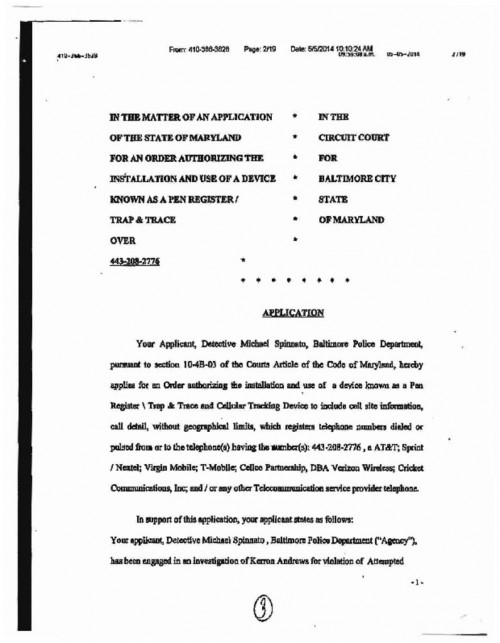

Pen Trap
In the first ruling of its kind, a federal magistrate judge held that the government must obtain a search warrant to collect the content of a telephone call, even when that content is dialed digits like bank account numbers, social security numbers or prescription refills. The decision from Magistrate Judge Smith in Houston closely followed the reasoning outlined in an amicus brief from EFF and the Center for Democracy and Technology (CDT).
The Texas judge invited EFF to file the brief in response to requests from government investigators to use a "pen register" or "trap and trace device" to collect all numbers dialed on a phone keypad after a call has been connected. Investigators can typically get "pen/trap" orders under a legal standard much lower than the "probable cause" required for a typical phone-tapping warrant, because only phone numbers used to connect the call are collected, not the content of the phone call itself.
However, the judge found that when it comes to dialed numbers that represent call content, federal statutes require that investigators either get a probable cause warrant or use filtering technology to ensure that only dialed phone numbers are collected. In fact, according to the court, "Congress ordered law enforcement to do just that, 12 years ago, yet the court notes that the government's current practice is to collect all dialed digits without using any filtering technology."
"Judge Smith correctly recognized that the privacy protections for your phone calls shouldn't depend on whether the information you are communicating is spoken or dialed," said EFF Staff Attorney Kevin Bankston. "Whether it's your bank account number, your social security number, your prescription refill, or even your vote for American Idol, the government has to get a search warrant to tap the numbers you dial after your call has been connected. Allowing such taps without a warrant not only violates longstanding statutes, as the court found here, but the Constitution itself"which makes it all the more troubling that government investigators have been collecting such information without a warrant for years."
In the same opinion, Judge Smith also rejected a new government request to track the location of someone's cell phone without a warrant. EFF has briefed two other courts on the cell-tracking issue, which has been a continuing controversy since Judge Smith and another judge in New York first published decisions on the issue last fall. Those decisions revealed that government investigators had routinely been tracking cell phones for years without getting warrants based on frivolous legal arguments.
Pen Trap Cases
- FOIA: Pen RegistersEFF has submitted several FOIA requests to try to document the frequency of "pen trap" or "trap and trace" electronic surveillance in recent years.
Press Releases
- July 21, 2006 Texas Judge Briefed by EFF Affirms Phone Privacy
Documents and Files
Table Of Contents
- Significant Documents Released Under FOIA
- Eastern District of New York
- Southern District of Texas
- Middle District of Florida
Significant Documents Released Under FOIA
- August 18, 2006 Email Concerning Survey of FBI Field Offices Re: Configuration of DCS-3000 to Collect Post-Cut-Through Dialed Digit Information[PDF, 127.86 KB]
- July 27, 2006 Email About Handling of Post-Cut-Through Dialed Digit Information Collected Through DCS-3000 System [PDF, 114.03 KB]
Eastern District of New York
- December 18, 2007 Court Order of District Judge Gleeson Affirming Judge Azrack’s Denial of Government Application[PDF, 23.09 KB]
- September 18, 2007 Court Order of Magistrate Judge Azrack Denying Government’s Application to Collect All Dialed Digits under Pen Register Statute [PDF, 973.69 KB]
- July 31, 2007 Supplemental Government Brief Replying to Amicus Concerning Constitutional Issues[PDF, 124.19 KB]
- July 16, 2007 EFF and Federal Defenders of New York Supplemental Amicus Brief Addressing Constitutional Issues[PDF, 167.87 KB]
- June 1, 2007 Supplemental Government Brief Addressing Constitutional Issues[PDF, 131.90 KB]
- May 18, 2007 Government Reply to Federal Defenders Amicus[PDF, 561.51 KB]
- February 9, 2007 Amicus Brief of Federal Defenders of New York Opposing Government Application[PDF, 180.93 KB]
- January 19, 2007 Government Brief in Support of its Application to Collect All Dialed Digits under Pen Register Statute[PDF, 339.20 KB]
Southern District of Texas
- October 17, 2007 Court Order of Judge Rosenthal Denying Government's Application to Collect All Dialed Digits under Pen Register Statute[PDF, 958.30 KB]
- July 18, 2006 Court Order of Magistrate Judge Smith Denying Government’s Application to Collect All Dialed Digits under Pen Register Statute[PDF, 485.19 KB]
- June 30, 2006 EFF and CDT Amicus Brief Opposing Government Application to Collect All Dialed Digits under Pen Register Statute[PDF, 54.98 KB]
- June 16, 2006 Court Order Overruling Government Objection to Granting EFF Leave to File Amicus Brief[PDF, 163.20 KB]
- Government Brief in Support of its Application to Collect All Dialed Digits under Pen Register Statute[PDF, 440.26 KB]
- Government Objection to Court Granting EFF Leave to File Amicus Brief[PDF, 70.21 KB]
- June 14, 2006
EFF Motion for Leave to File Amicus Brief[PDF, 90.89 KB]
- Notice of Motion[PDF, 137.99 KB]
Middle District of Florida
- June 20, 2006 Court Order of District Judge Conway Affirming Judge Spaulding’s Denial of Government Application[PDF, 347.31 KB]
- May 23, 2006 Court Order of Magistrate Judge Spaulding Denying Government Application to Collect All Dialed Digits Under Pen Register Statute[PDF, 131.52 KB]